



When it comes to manufacturing quality, inspecting finished products before delivery is often the first thing that comes to mind. But quality management involves much more than checking products at the end of the production line. It also includes planning, setting standards, and controlling processes from the very beginning.
This is where Quality Assurance (QA) and Quality Control (QC) come in. Both play important roles in manufacturing quality management, and both aim to ensure that products meet specified requirements. However, they focus on different aspects of quality and approach their work in different ways.
So, what exactly is the difference between QA and QC? Why isn’t product inspection alone enough? And how do these two functions work together on the production line?
What Are QA and QC?
To understand the difference, let’s first look at what each function does.
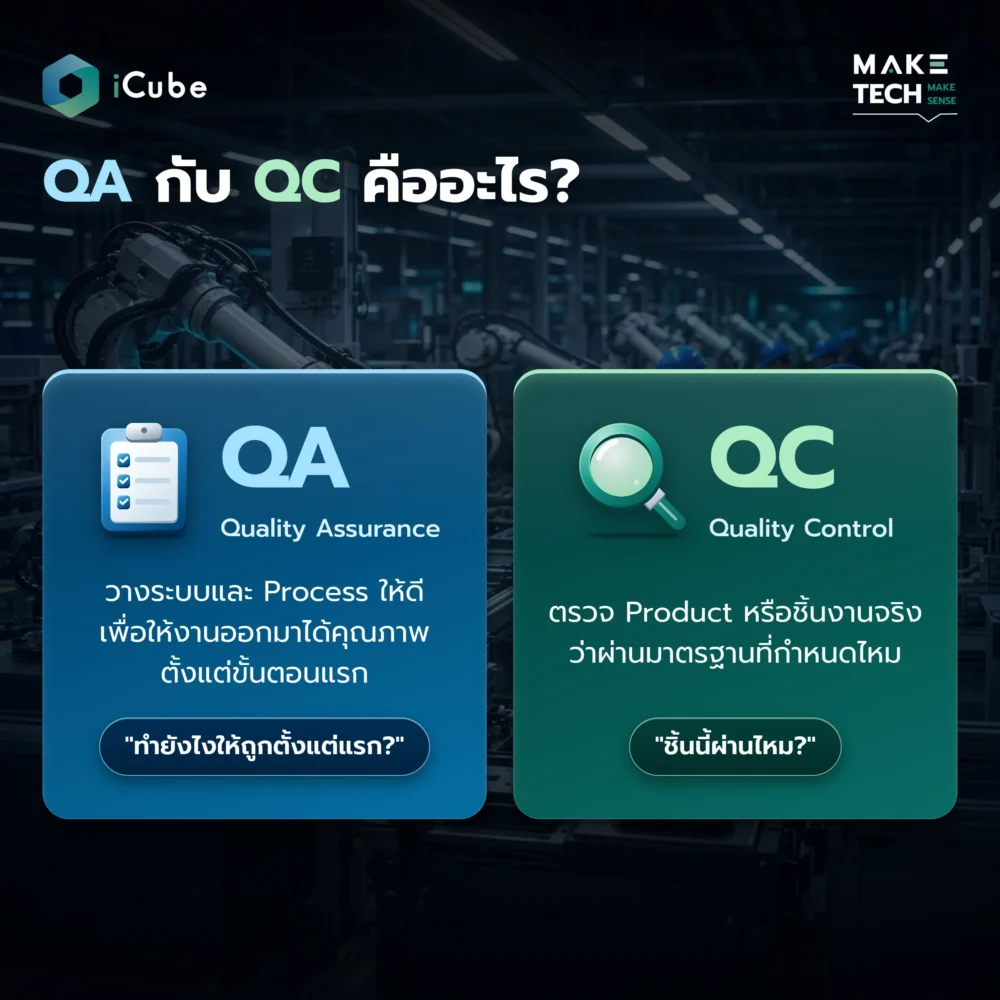
QA (Quality Assurance)
Quality Assurance focuses on establishing systems and processes that help ensure products consistently meet quality requirements.
Rather than waiting for defects to occur, QA aims to reduce the likelihood of problems by designing effective processes, setting clear standards, and ensuring that work is carried out consistently.
For example, in an automotive parts factory where components must meet precise dimensional requirements, the QA team may be responsible for establishing production standards, developing Standard Operating Procedures (SOPs), defining quality requirements, and conducting process audits.
These activities help ensure that employees and equipment operate according to established standards.
QA also involves employee training, quality system audits, and continuous process improvement to address issues that could affect product quality.
In simple terms, QA focuses on the question: “How can we get it right from the start?”
QC (Quality Control)
Quality Control focuses on inspecting and verifying whether raw materials, components, and finished products meet established quality standards and specifications.
While QA concentrates on systems and processes, QC focuses on evaluating actual production results through activities such as dimensional measurements, product testing, visual inspections, and sampling.
For example, in an automotive parts factory, the QC team may measure components after machining to verify that their dimensions fall within acceptable tolerances.
If a component fails to meet the required specifications, it is handled according to established procedures to prevent nonconforming products from moving to the next production stage or reaching customers.
In simple terms, QC focuses on the question: “Does this product meet the required standards?”
QA vs QC: What Are the Key Differences?
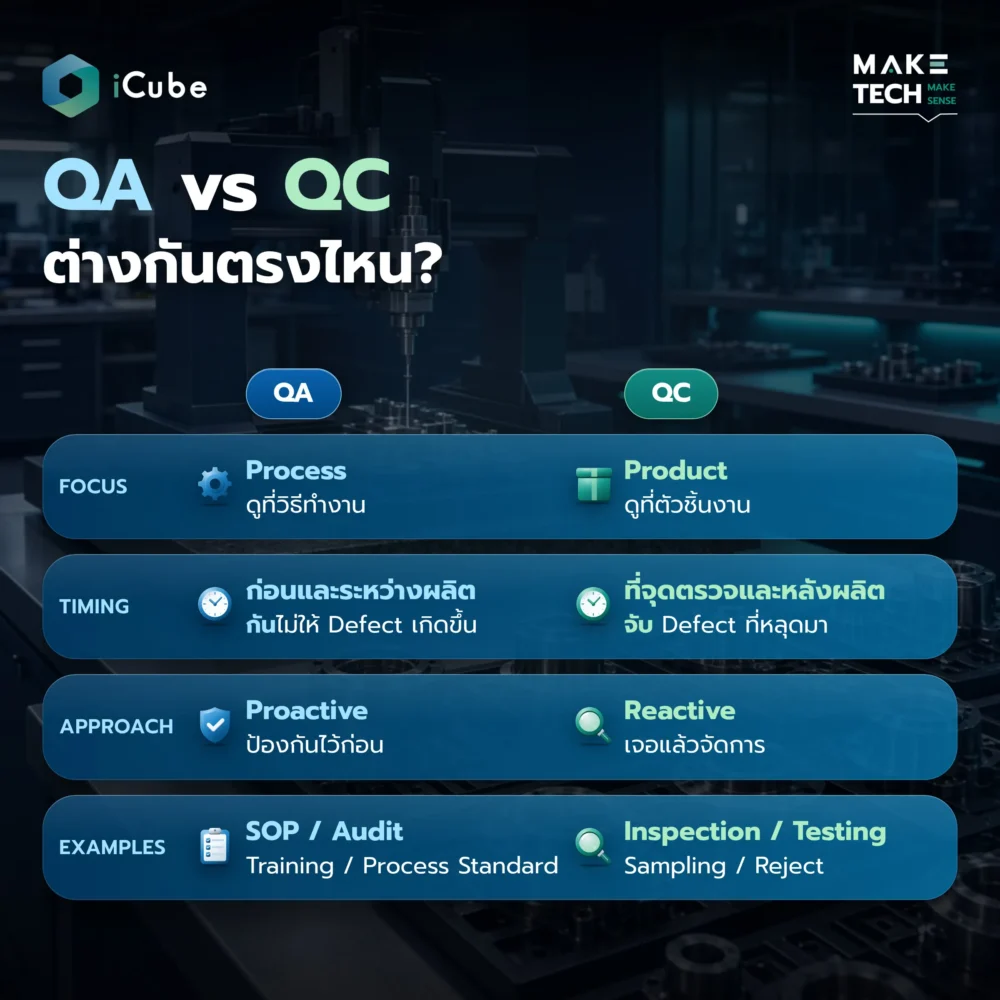
Although QA and QC share the same overall goal of maintaining product quality, their main difference lies in what they focus on.
QA focuses on processes. Its primary objective is to prevent quality problems by establishing standards, implementing controls, and improving working methods. The goal is to create production processes capable of consistently delivering products that meet quality requirements.
This is known as a proactive approach, where potential problems are addressed before they affect product quality.
QC, on the other hand, focuses on products. It involves inspecting, measuring, and testing actual production output to identify defects or deviations from established requirements.
QC plays an important role in detecting and responding to quality issues. However, this does not mean QC only takes place after problems occur. Inspections during production can also identify abnormalities early, before they affect a larger number of products.
Another difference is when these activities take place.
QA is involved in establishing processes before production begins, overseeing quality systems during operations, and continuously improving those systems. QC activities take place at defined inspection points before, during, and after production.
In short, QA focuses on building processes that prevent errors, while QC focuses on verifying and controlling the quality of what is actually produced.
Where Do QA and QC Fit into the Production Line?
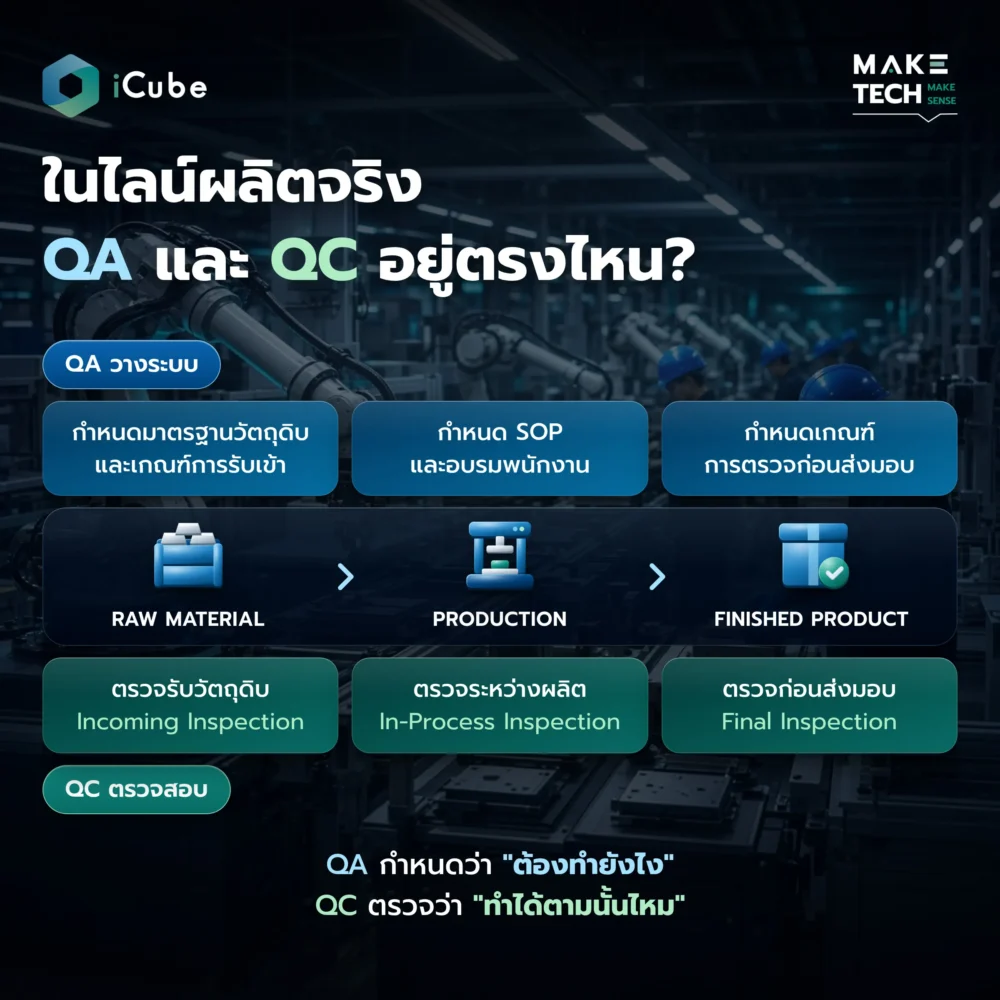
To make the distinction clearer, consider a metal components factory with three main production stages: receiving raw materials, manufacturing components, and inspecting finished products before delivery.
1. Before Production: Raw Materials
Product quality begins with the materials used in manufacturing. If raw materials do not meet the required specifications, they may affect the quality of components produced in later stages.
At this stage, QA establishes material specifications, acceptance criteria, and appropriate inspection methods.
QC then applies these requirements to inspect incoming materials, checking characteristics such as dimensions, thickness, or material properties.
This process is known as Incoming Inspection. It helps identify and prevent nonconforming materials from entering production.
2. During Production: Manufacturing
Once raw materials enter the production process, quality control must continue.
Even when approved materials are used, other factors can still cause variations in product quality, including machine settings, equipment wear, or operational errors.
QA establishes production standards and working procedures, such as SOPs, process control methods, and operational requirements.
QC inspects components at defined control points, which may include measuring parts after machining or sampling products during production.
This activity is known as In-Process Inspection.
If inspections reveal that component dimensions are beginning to deviate from the required specifications, the production team can investigate and take corrective action before the issue affects a larger number of products.
3. Before Delivery: Finished Product
After production is complete, finished products must be inspected according to the applicable requirements before delivery.
QA establishes product acceptance criteria and inspection standards, while QC carries out the required checks.
These may include dimensional inspections, performance testing, or visual examinations.
This stage is known as Final Inspection, which helps verify that finished products meet the required specifications before they are delivered to customers.
Across all three stages, QA and QC are closely connected. One establishes the standards and processes, while the other verifies that actual production results meet those requirements.
Why Do Manufacturers Need Both QA and QC?
Imagine a factory with clearly documented SOPs, well-defined production standards, and employees who have received appropriate training.
However, the factory does not conduct sufficient product inspections.
Even with well-designed processes, the factory may not know whether the products being manufactured actually meet quality requirements. Variations can still occur due to equipment conditions, materials, or other production factors.
Now consider the opposite situation.
A factory conducts thorough QC inspections and successfully identifies defective products. However, it lacks an effective QA system to investigate and improve the processes responsible for those defects. The same problems may continue to occur.
For example, if a machine repeatedly produces components outside the required dimensional tolerances, QC may detect and reject those components each time.
But without investigating why the machine is producing nonconforming parts, the same issue may return during the next production run.
As a result, the factory may spend additional time and resources on inspections, rework, replacement production, and managing scrap.
Detecting defects is only one part of quality management. Preventing the same defects from happening again is equally important.
This is why QA and QC need to work together. QC provides information about actual product quality, while QA and other relevant teams can use that information to improve production processes and reduce recurring problems.
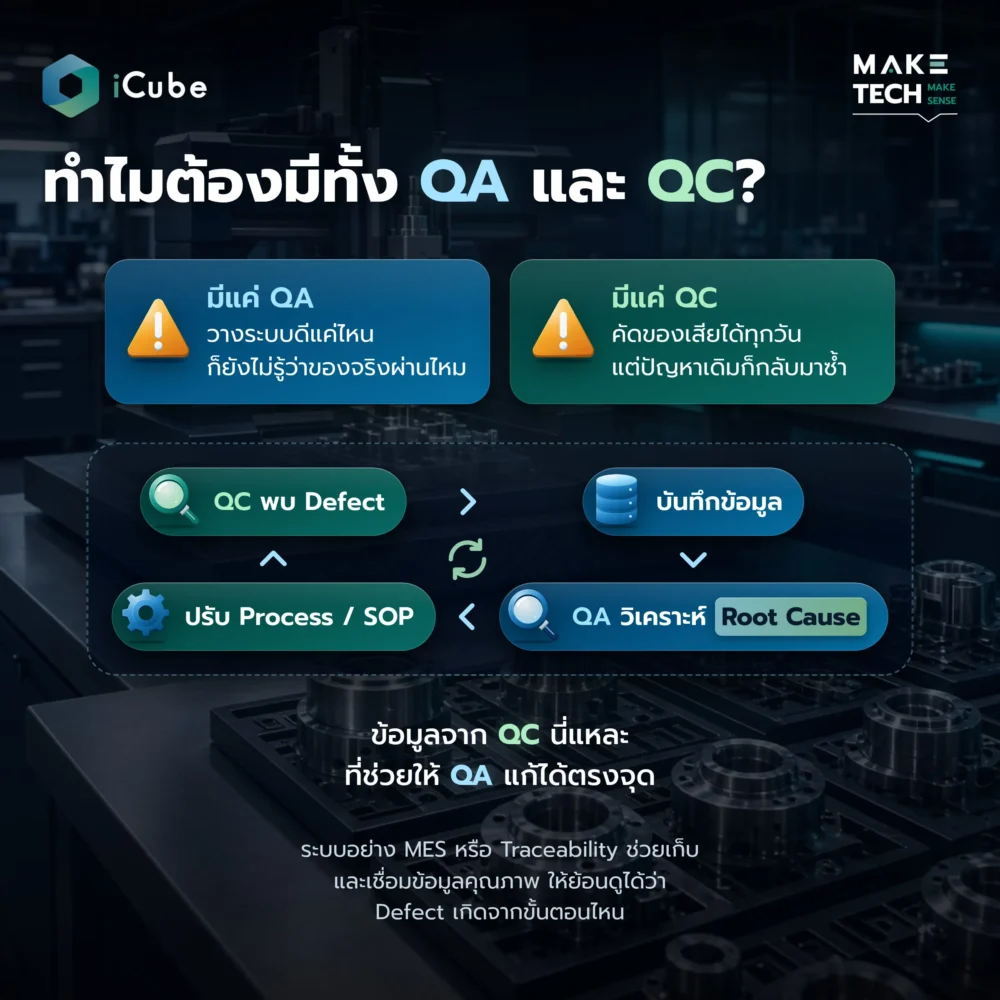
How Can QA Use QC Data to Improve Production Processes?
One of the key benefits of collaboration between QA and QC is the ability to turn inspection results into information that supports process improvement.
Consider a factory where QC repeatedly detects dimensional deviations in components produced by a particular machine.
When QC identifies a nonconforming component, the inspection results are recorded along with relevant production information, such as the production lot number, machine identification, production time, and type of defect.
This information can then support Root Cause Analysis, where QA works with production, maintenance, and other relevant teams to investigate what caused the problem.
Possible causes may include incorrect machine settings, worn equipment, or operating procedures that do not adequately address certain process risks.
Once the cause has been identified, the team can determine appropriate corrective and preventive actions.
These actions might involve adjusting machine settings, introducing additional process controls, or updating SOPs to better reflect actual operating conditions.
After the improvements have been implemented, QC continues monitoring inspection results to evaluate whether the changes have effectively reduced the problem.
This creates a continuous improvement cycle:
- QC Detects Defects
- Data Recording
- Root Cause Analysis
- Process Improvement
- Follow-up Inspection
Through this process, QC data becomes more than a record of whether products pass or fail inspection.
It provides information that QA and other teams can use to understand recurring quality issues and make more targeted improvements to production processes.
How Can Digital Systems Support QA and QC?
In factories with large production volumes, quality-related information may be stored across multiple sources, including paper inspection records, Excel files, measurement equipment, and different manufacturing systems.
When a quality issue occurs, gathering historical information can take time, especially when teams need to identify which material lot was used, which machine produced a component, or when an abnormality occurred.
Digital systems can help by collecting, organizing, and connecting production and quality data.
For example, a Manufacturing Execution System (MES) can record production information and link quality inspection results to manufacturing operations.
Depending on the system’s capabilities and integrations, this can make it easier for teams to monitor production status and access information about quality issues.
Traceability systems also support quality management by enabling manufacturers to track the history of products or production lots.
This may include information about materials used, machines involved, and production stages completed, based on the data recorded within the system.
When production and quality data are connected, QA and QC teams can investigate problems with greater context instead of repeatedly gathering information from disconnected sources.
However, digital technology does not automatically replace the responsibilities of QA or QC.
Instead, it provides tools that can make quality monitoring, data tracking, and analysis more efficient, helping teams make better-informed decisions.
Good Quality Is About More Than Inspection
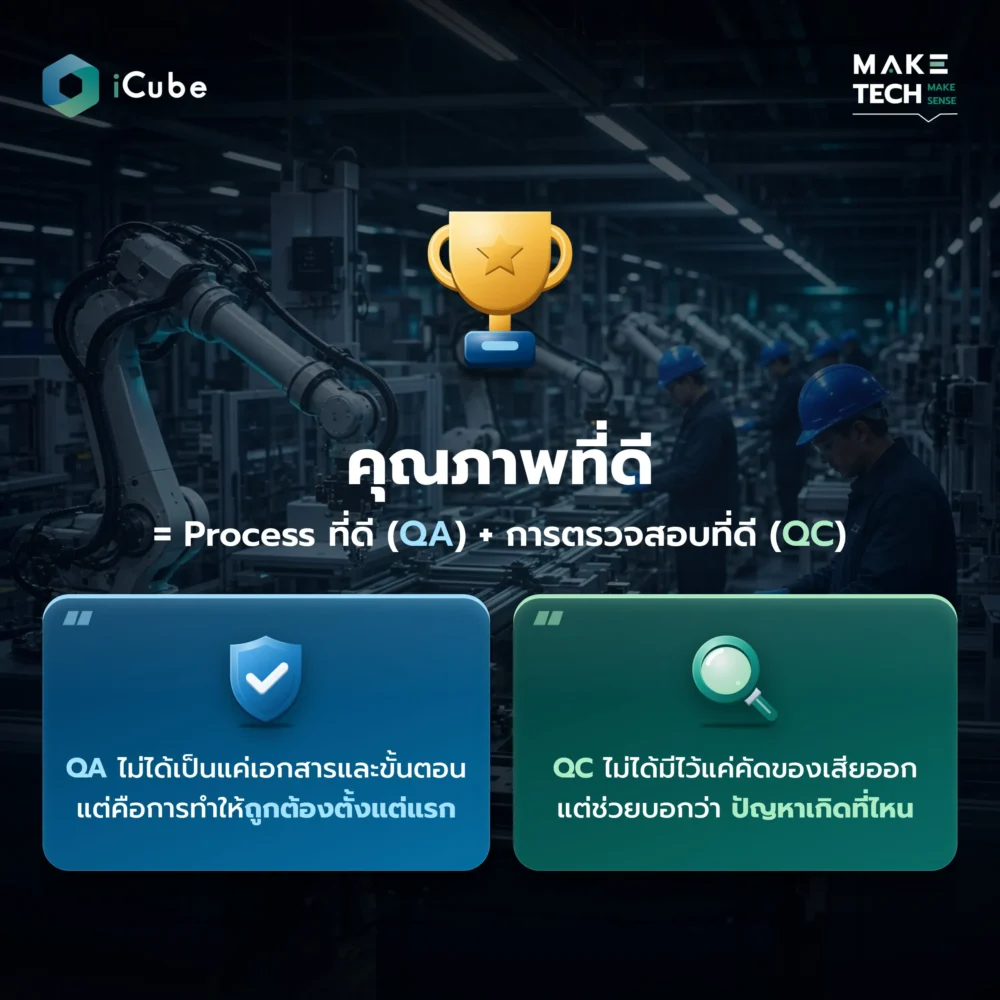
Maintaining manufacturing quality is not the responsibility of QA or QC alone. It requires effective processes supported by appropriate inspection and control activities.
QA establishes standards and working procedures to reduce the likelihood of errors from the beginning.
QC verifies actual product quality, identifies abnormalities, and checks whether manufactured products meet the required specifications.
What matters most is how inspection findings are used to improve production processes.
When manufacturers can detect problems, identify their causes, and prevent them from recurring, they can reduce waste and improve quality consistency over time.
Ultimately, good quality is not just about how many defects a factory can detect. It is also about building processes that reduce the likelihood of defects occurring in the first place.
Making manufacturing technology and processes easier to understand through practical insights and real-world industrial applications.